
Addressing Homelessness in Our Community
While the visible reality of street-entrenched homelessness often dominates public perception, it represents only the tip of a much larger iceberg. Beneath the surface lies a widespread and growing peril: thousands of our neighbors are currently housed but standing on the brink of displacement. With as many as 11,500 renter households struggling under unsustainable housing costs and more than 4,300 homes spending over half their income on rent, the transition from “housed” to “homeless” is often just one missed paycheck or medical emergency away. When such a significant portion of the population is stretched to the breaking point, it ceases to be a private struggle and becomes a systemic threat. This instability drains local purchasing power and increases the demand for emergency and social services, placing immense pressure on the economic well-being and social fabric of our entire community.
Housing Ends Homelessness
According to ZipRecruiter, in January 2025, the average annual salary in Nanaimo is $41,926 or $20.16 per hour. This income would allow for an affordable rent of about $1,153 per month.
The living wage for Nanaimo, reported by Livingwagebc.ca is $23.79, which is already higher than the average wage by $3.63. The living wage would allow for an affordable rent of about $1,361.
Housing median cost for all types of accommodation, according to Zumper.com in January 2026 is $1,944, up 2 percent from the same time last year.
This gap makes clear the pressure for AFFORDABLE housing for the average Nanaimo resident.
The Growing Crisis of Homelessness
Homelessness in our region has reached alarming levels. Families, seniors and young people are among those most affected. This section provides a brief overview of the issue, highlighting the urgent need for community action and support.
Age and Gender Distribution
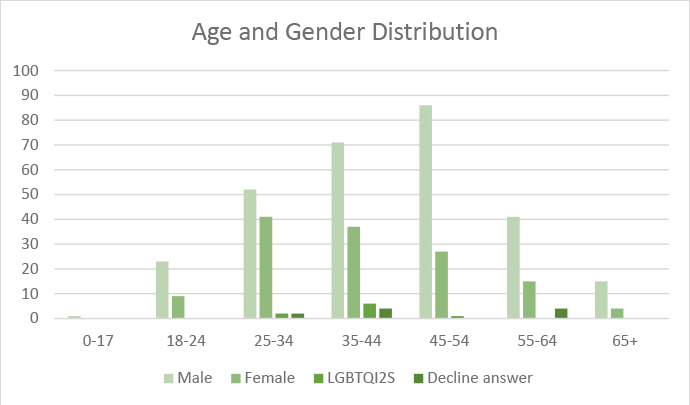
In the 2023 PIT count, the only notable shift in the overall age and gender distribution is the number of males between the ages of 45-54 which rose from 58 in 2020 to 86 in 2023. Otherwise, the age and gender distribution are almost identical to the 2020 survey data.
Age First Experienced Homelessness
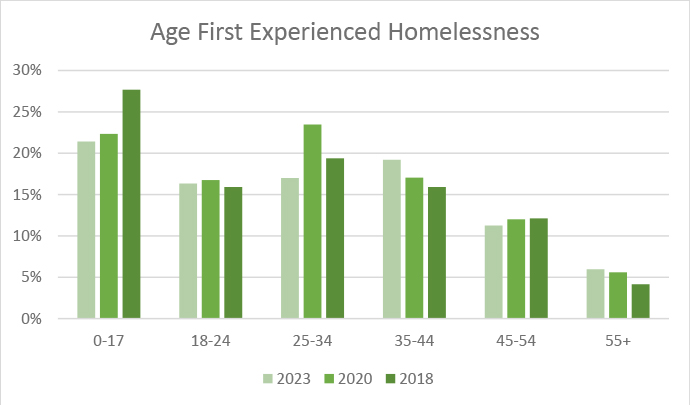
The data for 2023 shows that 37.7% of respondents reported first experiencing homelessness under the age of 25 (21.4% in the 0-17 years’ cohort and 16.3 % in the 18-24 years’ cohort). This finding is consistent with the 2020 figure of 39.1%. The need for youth based and “upstream” interventions is an established focus in homelessness serving and prevention systems. It is likely that the number of youths is under counted as homeless youth tend to avoid engagement with mainstream agencies and systems.
Residents or Travellers?
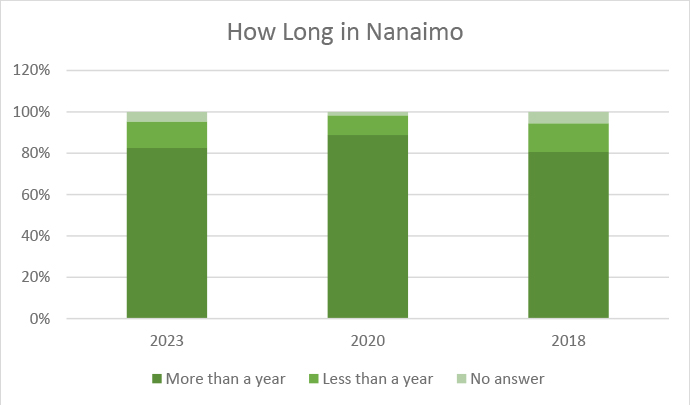
The evidence is pretty clear: People experiencing homelessness in Nanaimo are mostly from Nanaimo. This finding debunks the popular myth that “homeless people come to Nanaimo for the weather, public services, free accommodation, etc.”
Current Homelessness Statistics
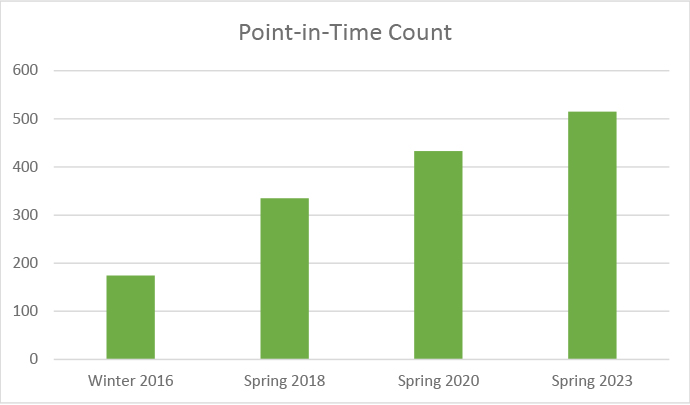
Understanding the scope of homelessness is crucial for effective intervention. Here are some key statistics gleaned from the 2023 Point-in-Time Count that shed light on the current situation in our region.
%
reported being homeless for six or more of the last 12 months.
%
have been homeless for at least half of the last 36 months.
%
have been in Nanaimo for more than 5 years
%
lost housing due to lack of income
Join Us in Making a Difference
Your support can transform lives. Sign up for our upcoming events, volunteer your time, or do something else to help us advocate for affordable housing in our community. Every action counts. Together, we can create lasting change in peoples' lives.