
Housing Explained
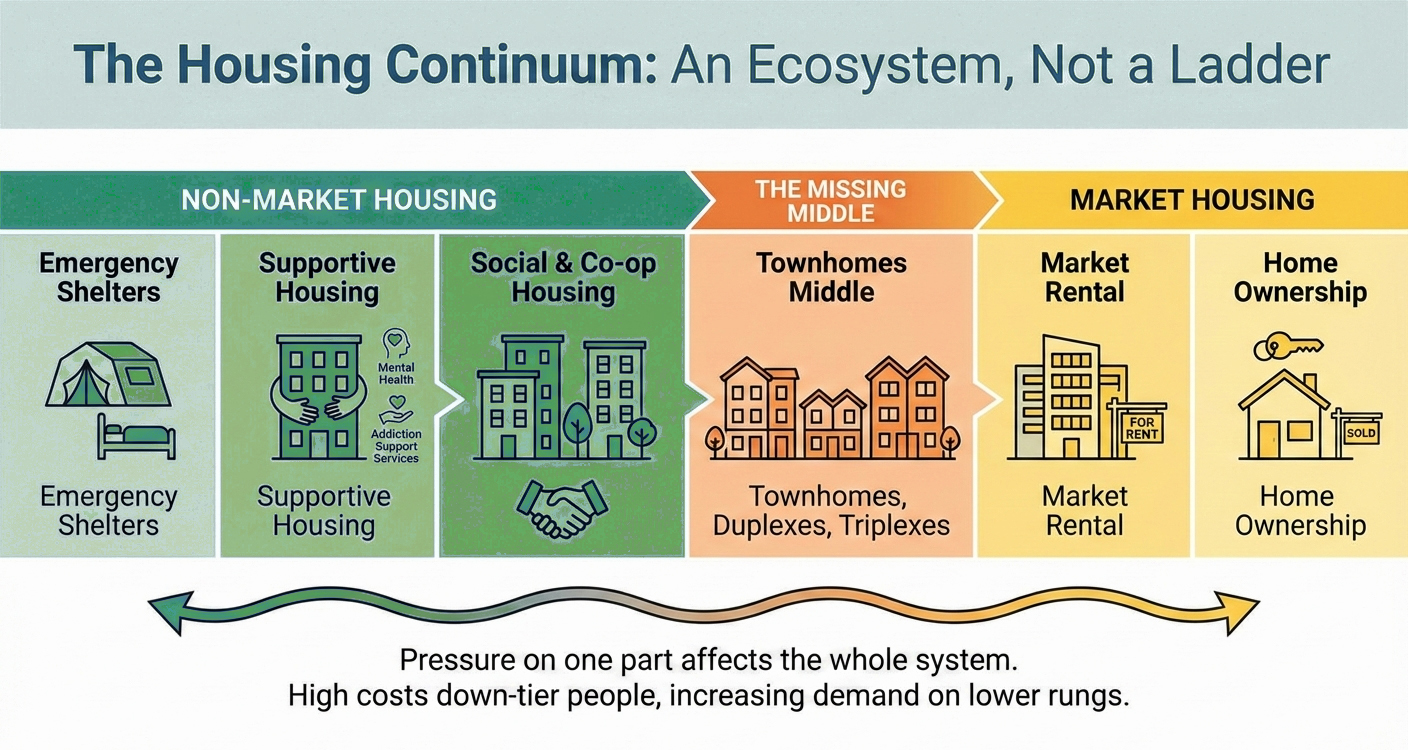
Understanding the Housing Continuum
The Housing Continuum is the “whole story” of how we live in our community. Rather than just a straight ladder where people only move up, it is a living, breathing ecosystem. This spectrum encompasses every form of shelter—starting from emergency support and non-market housing for our most vulnerable, moving through the “missing middle” of townhomes and rentals, and extending to private home ownership. By viewing housing through this lens, we recognize that every resident, regardless of income or background, occupies a vital space within this interconnected web.
The health of our city depends entirely on the balance of this entire spectrum. When one part of the continuum is blocked—whether it’s a lack of supportive housing or a shortage of attainable family homes—the pressure ripples through every other stage, driving up costs, putting pressure on lower cost housing and limiting options for everyone. Understanding the continuum allows us to stop treating housing as a series of isolated problems and start working toward a unified strategy that ensures every person in Nanaimo has a safe, stable place to call home.
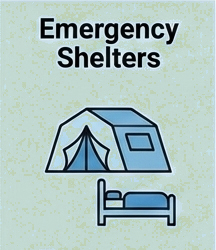
Emergency Shelters serve as the vital “safety net” of the housing continuum. It provides immediate, short-term accommodation for individuals and families facing an absolute crisis or the loss of their home. These spaces are designed for safety and stabilization, offering a secure place to stay while people navigate the transition toward more permanent living situations.
Beyond just a bed for the night, emergency shelters act as a critical “triage” point in our community. They provide access to basic needs—such as food, hygiene, and warmth—while connecting residents with the outreach workers and support services necessary to address the root causes of their housing instability.
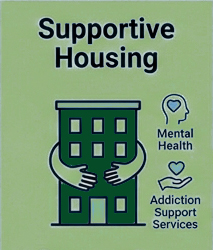
Supportive Housing provides a permanent home combined with “wraparound” services tailored to the needs of the individual. Unlike a shelter, which is a temporary stop, supportive housing is a long-term residence designed for people who require on-site assistance—such as mental health or addiction support, medical care, or life-skills training—to maintain their stability and live with dignity.
By providing support alongside a stable front door, this model addresses the root causes of housing instability rather than just the symptoms. It serves as a vital bridge toward independence, significantly reducing the pressure on our community’s emergency rooms, police services, and crisis centres.
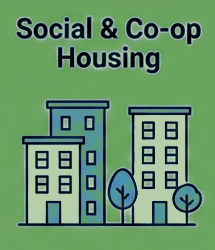
Subsidized and Co-op Housing represents the transition into long-term, independent living that remains insulated from the fluctuations of the private market. This rung is for individuals and families who are ready for independence but whose incomes don’t quite match the rising costs of private rentals.
-
Subsidized Housing: Often called “social housing,” these units are typically managed by nonprofits or the government. Rent is usually “geared to income” (RGI), meaning residents pay a set percentage (typically 30%) of their gross household income, ensuring they aren’t forced to choose between rent and groceries.
-
Co-operative Housing (Co-ops): A unique, community-focused model where the residents are members who collectively own and manage the building. Co-ops aren’t just about lower rent; they are about security of tenure and democratic control, where every resident has a say in how their community is run.
The “Missing Middle” describes a range of multi-unit housing types that are compatible in scale with single-family neighborhoods but offer more density and affordability. This includes duplexes, triplexes, fourplexes, and townhomes—housing options that have historically been “missing” from our city streets due to restrictive zoning.
As a key part of the Market Housing segment, these homes are essential for Nanaimo’s workforce, young families, and seniors looking to downsize. Because the “Missing Middle” uses land more efficiently than a traditional single-family house, it provides a more attainable entry point into the market, allowing people to live closer to where they work, shop, and play.
Market Rental housing is the primary home for a large portion of Nanaimo’s workforce. These units are owned and operated by the private sector—ranging from individual homeowners with a basement suite to large-scale apartment buildings. Because the rent is determined by current market supply and demand, this segment is highly sensitive to the “vacancy rate.”
When there isn’t enough supply to meet the demand, rents spike, which puts immense pressure on the rungs below. A healthy market rental sector is essential for a thriving economy; it allows young professionals, service workers, and new residents to move to our city and find a home that fits their lifestyle without needing a massive down payment. And it allows those who may be older and downsizing, an additional option for housing after home ownership.
Home Ownership is often seen as the final rung of the continuum, representing long-term stability and the ability to build financial equity. This includes everything from downtown condos and townhomes to traditional single-family houses.
Home ownership provides a sense of permanent “roots” in the community and contributes significantly to the municipal tax base that funds our parks, roads, and services. However, as the gap between local wages and home prices widens, our advocacy focuses on ensuring that ownership remains a realistic goal for the next generation of Nanaimo residents, rather than an unattainable luxury.
Join Us in Making a Difference
Your support can transform lives. Sign up for our upcoming events, volunteer your time, or do something else to help us advocate for affordable housing in our community. Every action counts. Together, we can create lasting change in peoples' lives.